
UNCOVERING THE HIDDEN RULES OF WORK
Can you imagine a young employee who excelled in school and, three weeks into their first real job, had their manager pull them aside and say, “I need you to step up more.” The young person is stunned and unsure how to respond.
This scenario is more common than it should be. A 2025 survey of hiring managers found that 84% believe most high school students are not prepared to enter the workforce. These hiring managers say that they are looking for young employees with strong communication, critical thinking, collaboration, and decision-making skills. At the same time, however, students generally believe that they have the skills needed to succeed.
The gap may not be as large as it appears, though. At Youth.Work.Connect., we think that students have more ability than employers recognize but lack practical knowledge about how to navigate the workplace. This information gap, we believe, contributes significantly to the difference in perceptions.
There has been a lot written about the “hidden curriculum of schools,” which are the rules and norms that students are often expected to follow but are not formally taught. Examples include how to ask teachers for help outside of the classroom, or how to participate in class or in group projects. This curriculum may be well-known to some students whose family members have shared their experiences with them. For others, if the curriculum is not explicitly taught, they will need to learn it on their own or not at all.
Work has its own version of this called the “hidden rules of work.” They hinder many young employees from establishing a strong professional foundation that promotes sustainable career growth. In the workplace, some young employees may not know how to communicate with a supervisor, when to speak up in a meeting, how to receive feedback, or how to build professional relationships.
If we treat the issue only as a skills deficit, we miss the opportunity to uncover the invisible barriers that hold many young employees back. A student who “isn’t stepping up” may simply have never been shown what stepping up looks like in this specific workplace or with this specific manager.
If you’re a student or young employee: avoid our opening scenario by learning how your workplace really operates. It is okay to ask your manager, recent hires, or a mentor to share the rules with you.
If you’re an employer: you can help close the readiness gap with more clarity – not just about what you expect, but about how your workplace actually operates.
What’s Coming Next
Over the next few months, our newsletters will explore the hidden rules of work in greater depth and offer ways to make these rules more visible. Some of what we’ll cover is:
- “Am I asking too many questions?’ vs. “Why aren’t they asking me more questions?”
- “What did my manager’s feedback really mean?” vs. “Did I give feedback that provided clear direction and showed my confidence in them?”
- “How do I build professional relationships with my co-workers?” vs. “How can I create opportunities for you to build professional relationships here?”
This is a shared responsibility: young employees should be aware that every workplace has its own set of norms that they need to try and understand. Adult allies should not assume that everyone will figure it out on their own. Making these rules visible is how we close the gap that surveys keep finding, one unwritten rule at a time.
What’s On Our Mind – Helping Youth Make Connections
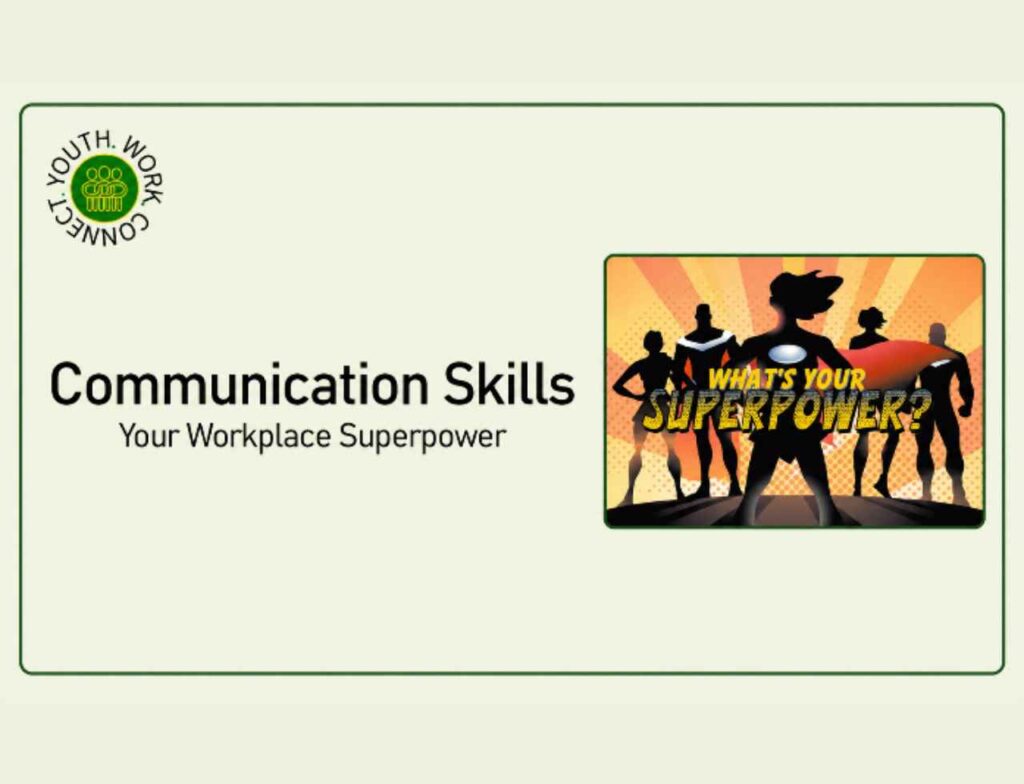

We recently facilitated two virtual workshops for participants in Raleigh’s Summer Youth Employment Program: one on Communication Skills and the other on Personal Brand.
We engaged the students in discussions, workplace scenarios, team activities, and self-reflection. We focused on helping students build lasting skills that employers value and connect their skills and values to their aspirations and goals. We were particularly encouraged by their willingness to participate and think carefully about how they want to be perceived in the workplace.
The experience reinforced our belief that many young people bring more workplace readiness than employers may recognize. Their early success can be accelerated when supervisors uncover the expectations and unwritten rules of their workplace.
LET’S STAY CONNECTED
We would appreciate your thoughts on our initiative and welcome opportunities to collaborate. You can reach us at info@youthworkconnect.org and we look forward to staying connected.