BUILDING JOB SKILLS BUILDS SOCIAL CAPITAL
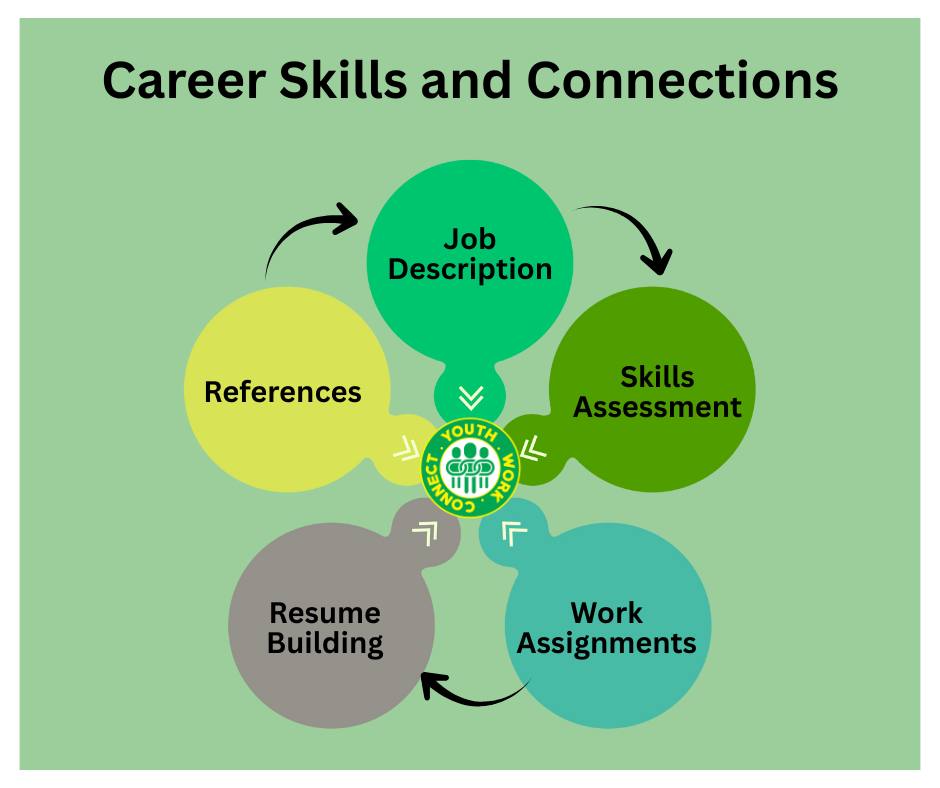
This month, we focus on resume building. A strong resume does more than list jobs or activities. It helps a young worker recognize what they have learned, describe the skills they are building, and communicate their value to future employers, schools, and career allies. In our Career Skills and Connections framework, resume building is not a stand-alone task. It is built from clear job descriptions, regular skills assessments, meaningful work assignments, and reflection along the way.
Resumes – a bridge to new opportunities
Students — Your Resume Is More Than a List of Jobs
A resume is not just something you use to apply for a job. It is also a way to tell the story of your professional growth. This can take place in school or at work.
Every time you work, volunteer, complete an internship, help with a project, or take on responsibility, you build skills. Some skills are technical, such as using software, following safety rules, or learning job-specific tasks, and are called hard skills. But some of the most important skills are durable skills – the skills you can use in many different settings.
Durable skills include communication, teamwork, problem-solving, active listening, reliability, initiative, and the ability to ask for and use feedback. You can either create a skills section on your resume or weave them into your experiences section.
- When updating your resume, consider not only what you did but also how you did it.
- Keep a journal of how you are growing in your hard and durable skills.
- Be specific about your skills. Instead of writing: “Good communication skills”, try: “Communicated well with supervisors and coworkers to ask questions, understand tasks, and complete assignments on time.”
- Before you finish your resume, ask a supervisor, mentor, teacher, coach, or coworker: “What skills have you seen me improve?” Their answer can help you name your strengths more clearly.
Building a resume is not just about getting the next job. It is about recognizing your growth, understanding your skills, and learning how to explain your value to others.
Adult Allies — How you can help student-workers build their resumes
Adult allies play an important role in helping young people turn work experience into future opportunity.
We have stressed the importance of youth having up-to-date job descriptions and periodic assessments of skill growth throughout their tenure working. It is also important for young people to journal about their job assignments. This allows them to reflect on what they are doing and keep a record of it.
These activities enable young workers to effectively communicate their professional growth on their resumes. But the reality is that they may not know how to fully describe their contributions, or they may underestimate the value of their durable skills. This is where you can help:
- Offer to review their resume and provide constructive feedback.
- Ask questions about what they liked, what challenged them, and what careers they may want to explore.
- Help them make connections to others in your industry or careers thay are interested in.
- Offer to serve as a reference.
The relationships adults build with young workers can become bridges to a brighter future.
What’s On Our Mind – Helping Youth Make Connections
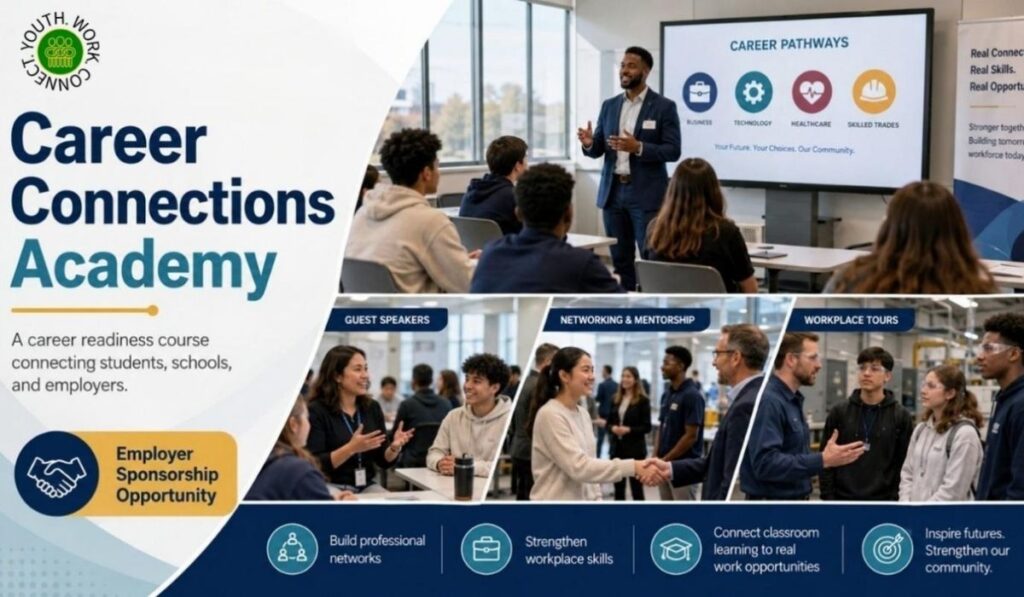
We are pleased to announce the creation of Career Connections Academy, a semester-long career readiness course designed to help high school students build professional networks, strengthen workplace skills, and explore postsecondary and career pathways.
Through classroom instruction, hands-on activities, guest speakers, and workplace visits, students will learn how professional relationships can support opportunity, confidence, and long-term career development.
We are planning to pilot Career Connections Academy in Durham, NC, and are seeking one or more employer partners to help bring the program to life. Employer sponsors will help students connect classroom learning to the workplace through guest engagement, field trips, workplace visits, and, where appropriate, pathways to internships, summer jobs, apprenticeships, or entry-level roles.
If your organization is interested in helping Durham students build career skills, professional relationships, and clearer pathways to opportunity, please contact Antoinette Daye, our Executive Director, at antoinette_daye@youthworkconnect.org.
LET’S STAY CONNECTED
We would appreciate your thoughts on our initiative and welcome opportunities to collaborate. You can reach us at info@youthworkconnect.org and we look forward to staying connected.