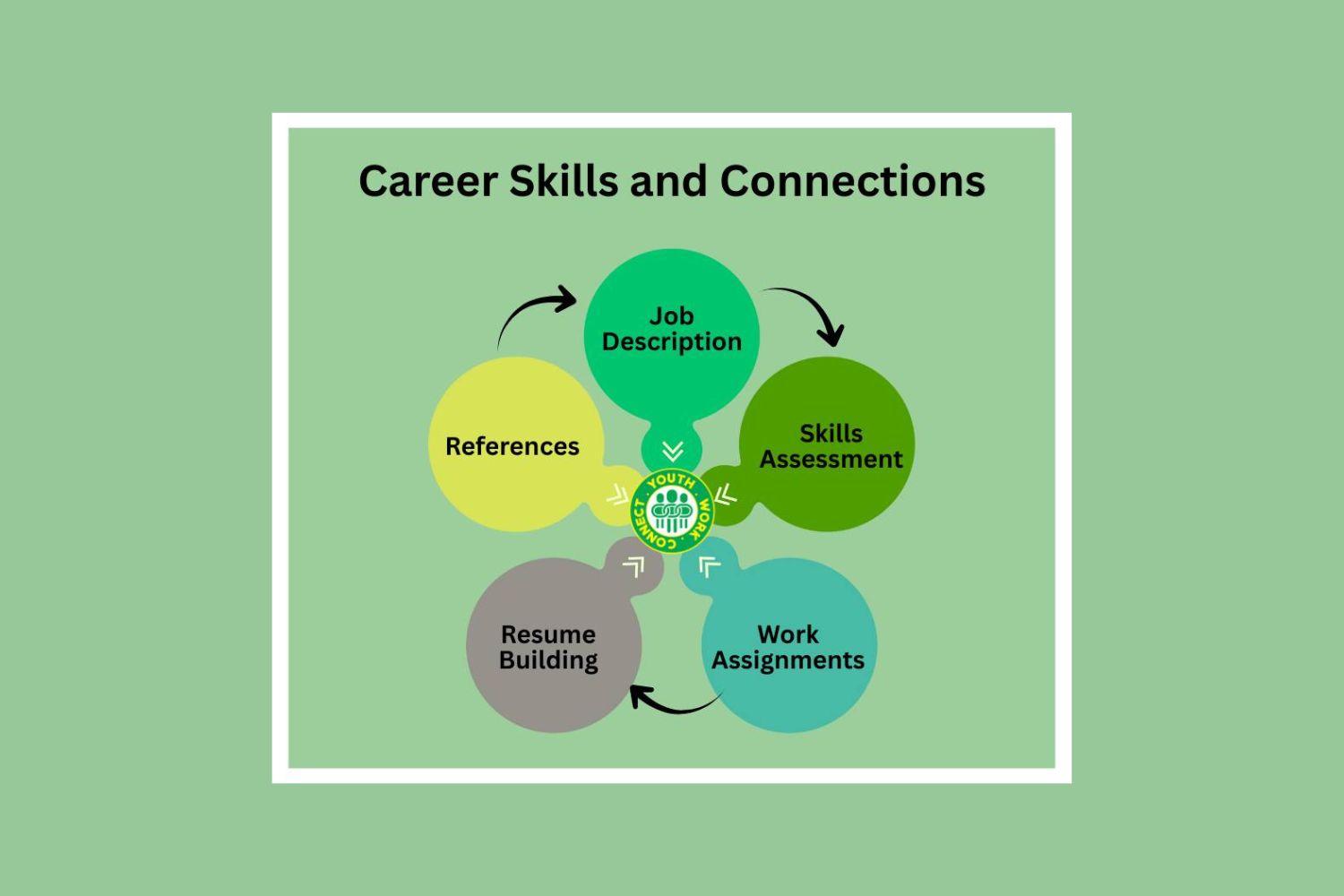
When you hire a young person, especially for one of their first jobs, you’re doing more than filling a position. You’re shaping how they understand work and professional relationships. Professional relationships are a form of social capital – the network of people who can provide guidance, information, and access to future opportunities. For many young people, especially those whose families may not already have deep professional networks, a first job can be one of the first places where that capital begins to grow.
With intention, you can turn a basic job into a launchpad for long-term success.
Here’s how.
1. Start With a Job Description That Teaches
Before hiring, clarify the role.
A strong job description does more than list tasks- it helps a young employee understand:
- What they are responsible for
- What success looks like
- How their work connects to the larger organization
Ask yourself:
- Are the tasks age-appropriate and clearly defined?
- Can performance be measured?
- Will the employee have opportunities to connect with others, and will they know who to go to for help?
Clarity reduces confusion and helps build confidence.
2. Use a Simple Skills Assessment
Once the role is defined, identify the skills required for the position. Be sure to include both job-specific ones (hard skills) and those that the young person will take with them from job to job (soft skills).
Create a three-column checklist:
- Strengths: Skills the employee already demonstrates
- Developing: Skills they have but need to improve
- To Build: Skills they don’t yet have
This tool will benefit your organization and the young person:
- It will help assign appropriate work assignments and training
- It will give you and the young worker a roadmap for development
- It will help the young person build their social capital through soft skills like communication and teamwork
Reassess periodically – progress should be visible to both you and the employee.
3. Make Work Assignments Meaningful
Meaningful work motivates employees and addresses important organizational needs.
When young people are trusted with meaningful assignments, they do more than build skills- they build confidence, credibility, and workplace relationships that become the foundation of social capital.
Create a mix of short- and long-term projects.
- Short-term projects offer young workers many opportunities for success, help them use or learn a variety of skills, and enable them to accomplish important tasks for the organization.
- Long-term projects allow young workers to fill gaps when they are less busy and to build important project management and time management skills.
Make space for youth voices and create an environment where young people feel like their ideas matter. For many, this is their first workplace experience, and being heard helps build confidence and connection.
- Ask for their input during projects
- Check in regularly
- Be open to their perspective
- When possible, act on their ideas or explain why not.
When young workers feel heard, they’re more engaged, take more responsibility, and start to see themselves as part of the team, not just someone there to do tasks. Being part of a team will help them grow their professional networks.
4. Encourage Reflection for Resume Building and Career Exploration
Most entry-level jobs don’t include structured reflection. That’s a missed opportunity.
A simple practice: Ask young employees to keep a journal and set aside time for the employee to reflect on:
- Completed assignments
- Skills developed
- Feedback received
Review it together.
This helps the employee:
- Recognize their own growth
- Learn how to describe their experience
- See forward momentum
It also strengthens your relationship with them—an essential component of social capital.
Their journal can be an important tool for updating their resume and reflecting on whether they would like to pursue a career in your field, or not.
5. Close the Loop With a Strong Reference
If the employee performs well, don’t let the experience end quietly.
Offer to be a reference for:
- Future roles
- Internal advancement
- Educational opportunities
Use their updated resume and your observations to make it specific.
Also, teach them to:
- Ask for references proactively
- Maintain those relationships over time
That’s how social capital compounds.
The Bigger Picture
When you follow this cycle—clear expectations, skill development, reflection, and advocacy—you’re doing more than managing an employee.
You’re helping a young person build:
- Confidence
- Competence
- Connections
That combination is what drives long-term career mobility.
If you want support implementing this approach, Youth.Work.Connect. offers tools and guidance designed specifically for youth employment settings.